







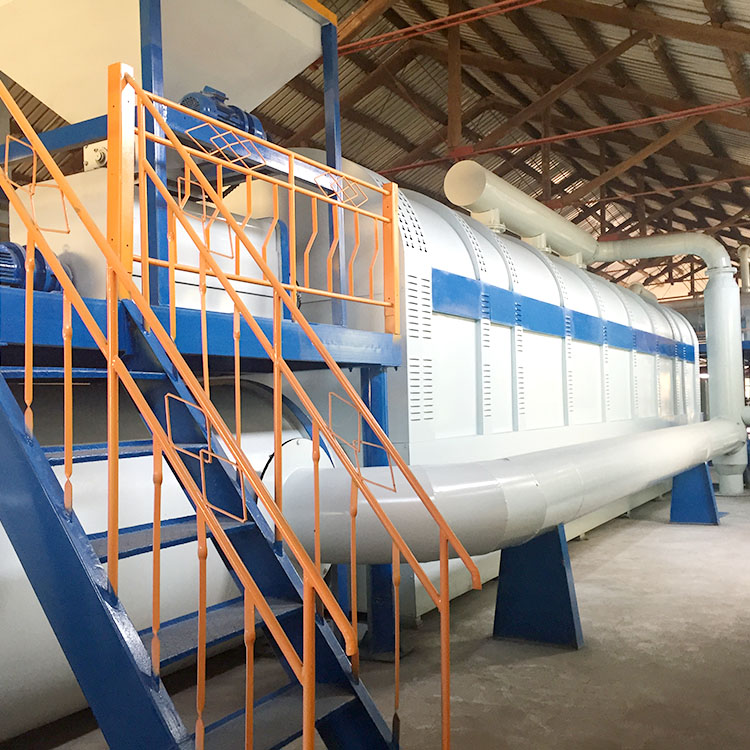
50 tons of domestic waste treatment equipment
The anaerobic low-temperature continuous pyrolysis process of urban and rural domestic waste is used to treat urban and rural domestic waste harmlessly and resourcefully. On the basis of harmlessness and resource utilization, stabilization and reduction treatment are achieved. Domestic waste generated after pyrolysis treatment Inert solid carbon residue, pyrolysis fuel oil, bio-natural gas. Among them, solid carbon residue is sorted and some metals are recovered. The remaining carbon residue has many comprehensive utilization directions and good economic benefits; pyrolysis fuel oil is recycled for industrial fuel or personal use; bio-natural gas is used for pyrolysis equipment after dechlorination and purification. Circulating heating energy can meet more than 60% of its own energy self-sufficiency. After pyrolysis treatment, the mass reduction rate of domestic waste is higher than 50%, the volume reduction rate is higher than 90%, and carbon emissions can be reduced by 0.4-0.7 tons per ton.
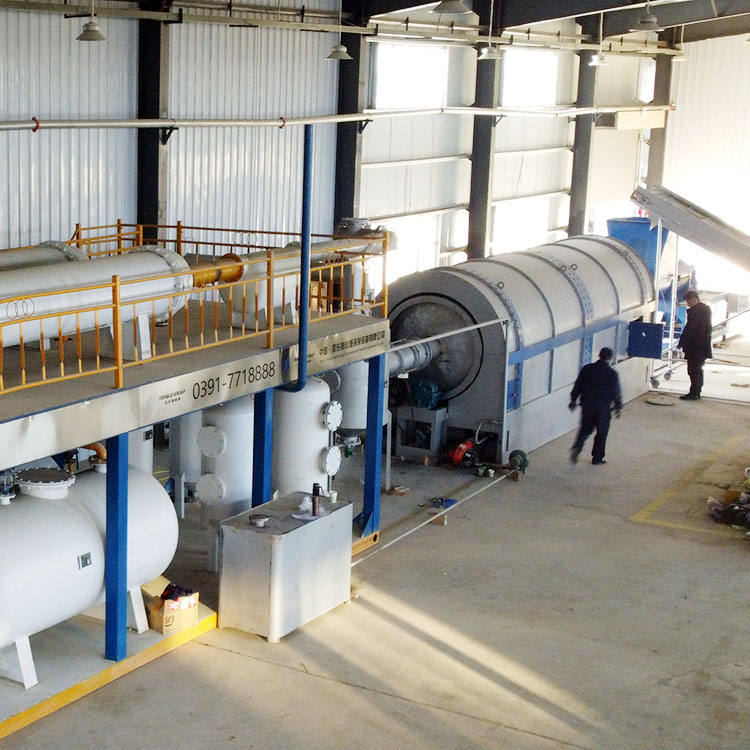
10 tons of domestic waste treatment equipment
The anaerobic low-temperature continuous pyrolysis process of urban and rural domestic waste is used to treat urban and rural domestic waste harmlessly and resourcefully. On the basis of harmlessness and resource utilization, stabilization and reduction treatment are achieved. Domestic waste generated after pyrolysis treatment Inert solid carbon residue, pyrolysis fuel oil, bio-natural gas. Among them, solid carbon residue is sorted and some metals are recovered. The remaining carbon residue has many comprehensive utilization directions and good economic benefits; pyrolysis fuel oil is recycled for industrial fuel or personal use; bio-natural gas is used for pyrolysis equipment after dechlorination and purification. Circulating heating energy can meet more than 60% of its own energy self-sufficiency. After pyrolysis treatment, the mass reduction rate of domestic waste is higher than 50%, the volume reduction rate is higher than 90%, and carbon emissions can be reduced by 0.4-0.7 tons per ton.


Yongle Equipment
Yongle Equipment

 FACEBOOK
 LINKYIN

Copyright Reserved 2024 Yongle
