



 2025-12-19
The number of motor vehicles in Kazakhstan exceeds 5 million, with oil and gas extraction machinery, agricultural tractors, and other vehicles consuming over 3 million tires annually. Approximately 180000 tons of waste tires are generated annually, with commercial and agricultural machinery tires accounting for 70% of the total. According to the Implementation Rules for Waste Management and Environmental Protection Requirements, outdoor burning of waste tires is illegal. Currently, efforts are being made to promote the development of the waste tire resource utilization industry. Large scale recycling plants have been planned and constructed in areas such as Kiziluorda to process waste tires into products such as infiltration pipes and plastic playgrounds. The local agricultural irrigation demand is strong, and road infrastructure (such as the Almaty Nur Sultan Expressway) requires a large amount of modified rubber materials. The resource utilization rate of traditional processing equipment is less than 20%, and efficient recycling equipment has become the key to industrial upgrading.
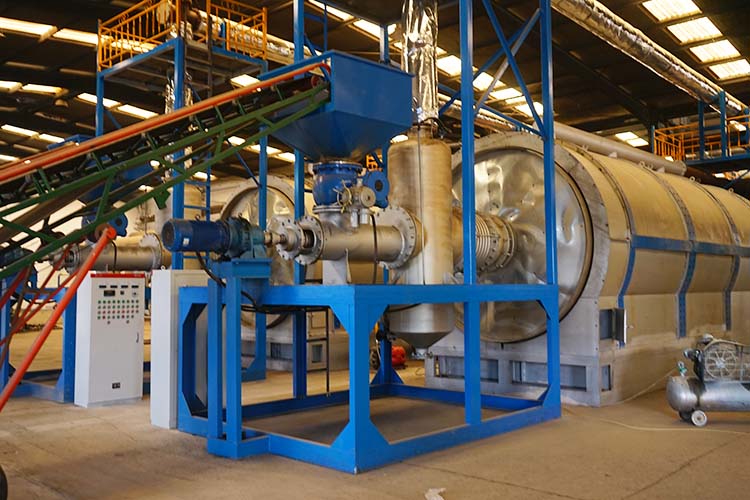
China Yongle Environmental Protection Engineering has customized a complete set of equipment for "efficient separation of steel and rubber+industrial adaptation" based on the characteristics of waste tires in Kazakhstan. The pre-treatment stage adopts a "hydraulic shearing magnetic separation linkage" system to optimize tungsten steel blades for the wear resistance of agricultural and mining tires. The steel wire separation rate reaches 99.8%, which meets the recycling standards of the Kazakhstan Iron and Steel Association; The core module enhances rubber strength through "low-temperature vulcanization technology", producing 3-12mm recycled rubber particles with a compressive strength of 28MPa, which can be used to produce agricultural infiltration pipes, highway speed bumps, and seals for oil and gas extraction equipment, with an overall resource utilization rate of 96%. The equipment adopts a "natural gas grid dual drive" to adapt to the local energy structure advantages.
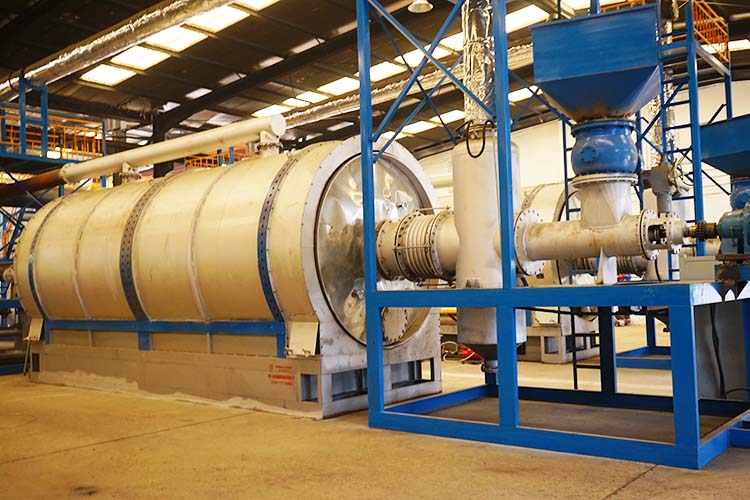
Adapting to industrial needs in multiple scenarios: At the Kiziluorda waste tire recycling plant, the daily processing capacity of large-scale equipment is 50 tons, and recycled rubber is directly supplied to the infiltration pipe production enterprise, forming a "waste tire recycling agricultural supporting" loop; In the northern agricultural region, small equipment with a daily processing capacity of 10 tons processes agricultural machinery waste tires into irrigation pipeline sealing rings and anti slip pads for agricultural tools, solving the problem of irrigation leakage in arid areas; At ports along the Caspian Sea coast, modular equipment is used to process waste tires from freight trucks, and the produced anti-collision strips are used for container terminal protection; In the scenic areas of Almaty and Nur Sultan, equipment processes colored waste tires into leisure seats and landscape facilities, combining environmental protection and practical value.
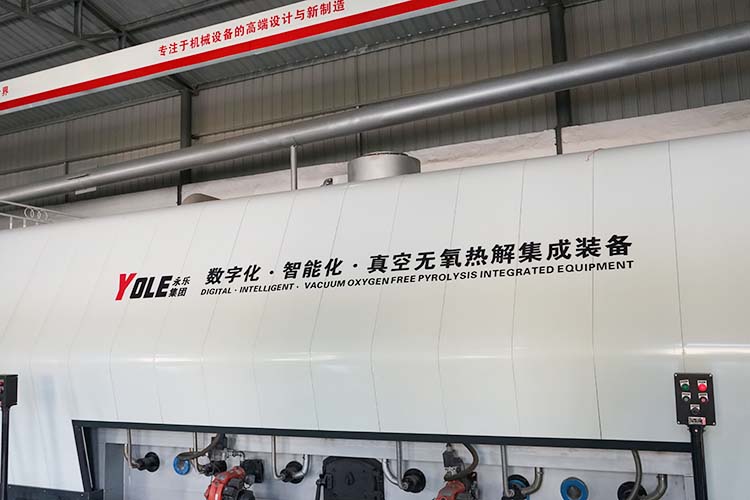
Compliance and industrial synergy guarantee: The equipment has been registered with the Ministry of Ecology of Kazakhstan and meets the requirements of waste resource utilization. Set up a service station in Almaty, cooperate with local rubber recycling enterprises, and connect to the official recycling network. Equipped with a Kazakh Russian technical team, the core components adopt universal specifications, and replacement parts can be purchased from the local hardware market. The equipment operates with a sprinkler dust reduction device, and the exhaust gas is discharged after desulfurization treatment, which helps Kazakhstan promote the development of the waste tire resource utilization industry and reduce import dependence.
Yongle Environmental Protection is mainly engaged in the research and development, production and sales of complete sets of technical equipment for organic solid waste disposal and comprehensive utilization. Production and manufacturing, domestic waste treatment equipment, tire pyrolysis equipment, medical waste disposal equipment, hazardous waste disposal equipment, and achieve efficient and comprehensive utilization of resources through independently developed low-temperature anaerobic pyrolysis equipment technology solutions.
Tags:Ha country's waste tire regeneration is adapted to meet the needs of agricultural infiltration irrigation,waste tire refining equipment,YONGLE GROUP
 Latest news