



 2026-03-17
As a key country of environmental protection transformation in Central Asia, according to the Environmental Code and the Vision of Various Wastes Management in 2026-2030, the Ministry of Ecology and Natural Resources shall coordinate domestic waste supervision, fully promote the presidential initiative of "Clean Kazakhstan", and clearly propose the goals of 100% solid waste landfill rate, 95% waste treatment rate and 40% waste recycling rate in 2030. At present, Kazakhstan generates about 4.5 million tons of domestic waste per year, but the recovery rate is only 25% - 26%, far below the target. Most of the rest are sent to landfill sites that do not meet environmental requirements, forming serious environmental hazards. The population of the country is distributed dispersedly, and the core cities such as Astana and Almaty produce a large amount of household garbage every day, of which the food garbage accounts for up to 30% - 40%, but the relevant processing infrastructure is almost empty; In rural and remote areas, there are such problems as random garbage stacking and open burning, which aggravate soil and air pollution. At the same time, Kazakhstan plans to completely ban some types of plastic packaging in 2025, promote the transformation of waste management to the whole chain of "reduction-classification-regeneration-energization", and urgently need a domestic waste treatment equipment suitable for the local climate, complying with the compliance requirements, low cost and high efficiency, so as to help the construction of waste treatment plants and the development of circular economy.
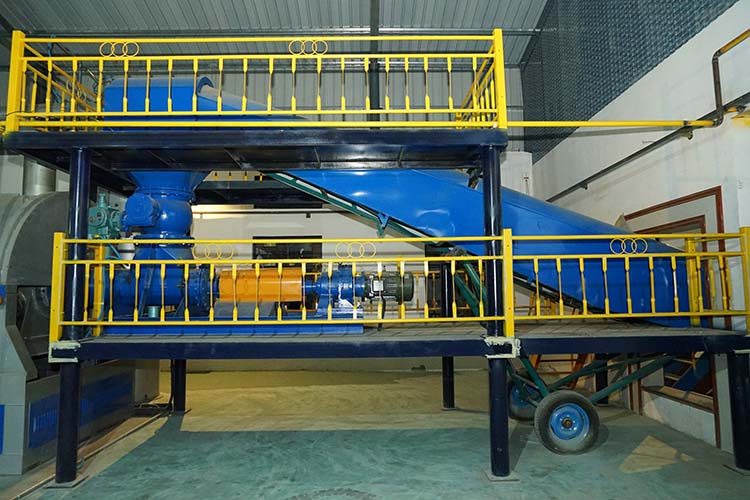
Targeted research and development of domestic waste treatment equipment of "Kazakhstan Compliance and Weatherproof Recycling Fund" for China Yongle Environmental Protection Project, accurate adaptation to local environmental protection demands and climate characteristics: the equipment strictly follows the requirements of Kazakhstan Environmental Code and new concept of waste management, can assist customers in applying for government subsidies for environmental protection projects, and is applicable to ecological payment and use of sewage fees, which has been put on records by the Ministry of Ecology and Natural Resources. High-strength, low-temperature and dust-resistant materials are used, which can adapt to the extreme climate of cold winter and dusty spring and autumn in Kazakhstan, and operate stably without failure; Equipped with "Grid-Solar Dual Drive System", it can effectively deal with the problem of unstable power in some remote areas, and the operation energy consumption is 38% lower than that of traditional equipment. The core adopts the technology of "low temperature anaerobic fermentation+resource grading utilization" to optimize and adapt to the characteristics of high proportion of food waste, the degradation rate of organic waste reaches 90%, the biogas produced by fermentation can be used for small power generation or civil fuel, the organic fertilizer made from the fermentation residue adapts to the local agricultural planting needs, and the recoverable materials are classified and connected to the local recycling system, the overall resource utilization rate reaches 85%, helping to realize the waste "turn waste into wealth", which conforms to the concept of circular economy development.
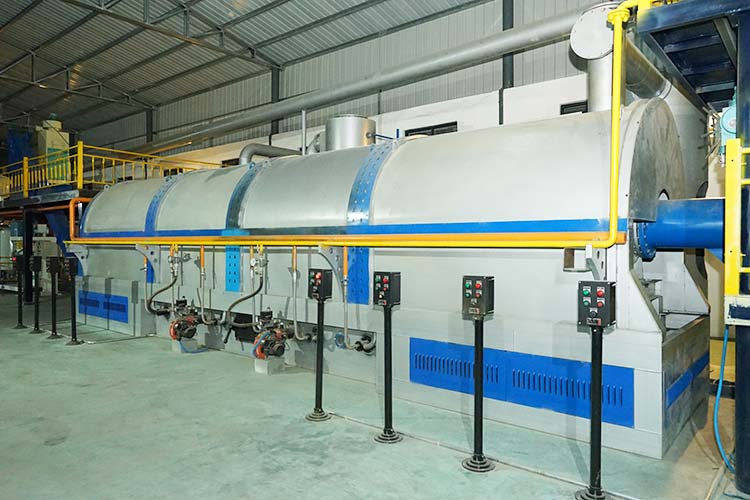
The whole scene adapts to urban and rural and industrial demands: in core cities such as Astana and Almaty, the daily processing capacity of large centralized equipment is 85t, which can help build standardized waste treatment plants, adapt to the management mode of "charge from volume", automatically complete waste classification and recycling treatment, greatly improve waste treatment efficiency and help achieve the waste treatment target in 2030; In small and medium-sized cities such as Kyzylorda and Karaganda, the daily processing capacity of the modular equipment is 45t, the volume is compact and can be flexibly deployed, and it is suitable for the use of urban waste transfer stations to reduce the landfill pressure; In rural and remote areas, the daily processing capacity of small mobile equipment is 10t, which can be driven by solar energy to operate independently from the power grid, effectively solving the problem of random stacking of garbage. Fermentation organic fertilizer is directly supplied to the local farm and farmland, and promoting the coordinated development of agriculture and environmental protection; In the central market and food processing park of the city, small equipment can handle fruit and vegetable wastes and processing wastes in real time to avoid peculiar smell caused by garbage accumulation and meet the requirements of urban environmental management.
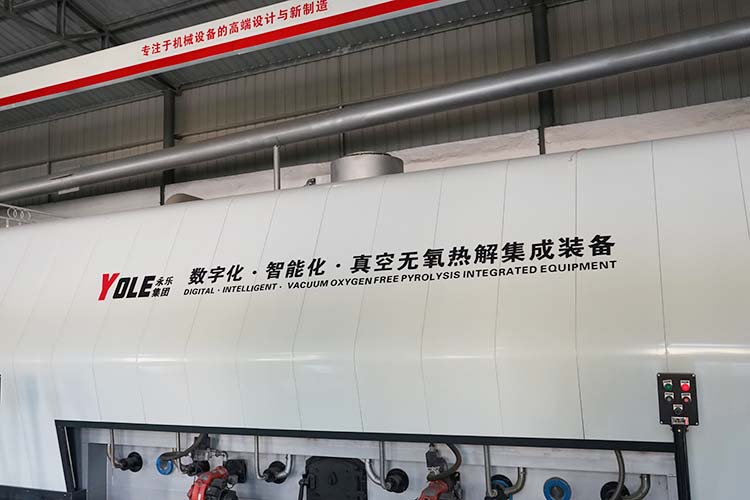
Compliance and localization service guarantee: the equipment fully conforms to the Environmental Code of Kazakhstan and the new concept of waste management, and can assist customers in docking with the Ministry of Ecology and Natural Resources, completing compliance filing and project declaration, and helping to obtain government environmental protection fund support. Establish a service center in Astana to provide three-language operation training and regulation interpretation in Kazakh, Russian and English, and assist customers in adapting local environmental protection supervision requirements; Common specifications are adopted for core parts, and vulnerable parts can be purchased and replaced in Kazakhstan, greatly reducing operation and maintenance costs; The whole process of equipment operation is automatic, no special person is required to be on duty, it adapts to the local human cost status, and at the same time, the weathering design is optimized to extend the service life of the equipment to 7.5 years. Help Kazakhstan to promote the construction of waste treatment plants, promote the transformation of waste management from "landfill first" to "closed-loop utilization", implement the "clean Kazakhstan" initiative and safeguard the regional ecological environment.
Yongle Environmental Protection is mainly engaged in the research and development, production and sales of complete sets of technical equipment for organic solid waste disposal and comprehensive utilization. Production and manufacturing, domestic waste treatment equipment, tire pyrolysis equipment, medical waste disposal equipment, hazardous waste disposal equipment, and achieve efficient and comprehensive utilization of resources through independently developed low-temperature anaerobic pyrolysis equipment technology solutions.
Tags:Kazakhstan garbage equipment compliance adaptation weather resistance and sand resistance,household waste treatment equipment,YONGLE GROUP
 Latest news