



 2026-01-29
The number of motor vehicles in Laos is gradually increasing, and the construction, agricultural machinery, and road transportation industries consume about 1.6 million tires annually, generating about 19000 tons of waste tires annually. Currently, open-air stacking and simple incineration are the main methods, which not only pollute the soil and atmospheric environment but also violate the regulations on hazardous waste disposal in the Environmental Protection Law. With the acceleration of infrastructure construction and the gradual development of small-scale industries in Laos, the market's demand for the resource utilization of waste tires has become prominent. In combination with the high local diesel prices and large demand, waste tire pyrolysis refining (non-standard diesel) has become the core direction, which can be used for small generators, agricultural machinery, and industrial production power supply. At the same time, steel wire and rubber particles can be recycled and reused, and there is an urgent need for low-cost, easy to operate, and locally adapted recycling equipment that meets the needs of people's livelihood and industry, without complex processes and high investment.
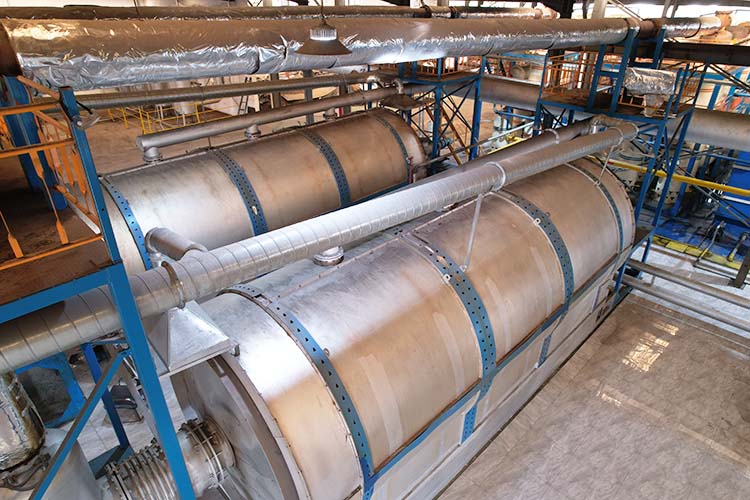
China Yongle Environmental Protection Engineering customizes the "Old Standard Refinery Recycling Simple Version" waste tire processing equipment: The pre-treatment stage adopts an integrated design of "mechanical cutting manual assisted sorting", optimizing the tool to adapt to various types of tires (engineering tires, agricultural machinery tires, passenger tires), with a steel wire separation rate of 99.0%. The separated steel wire can be recycled and reused, meeting local resource recycling needs. The core adopts the technology of "low-temperature pyrolysis+simple oil refining", which does not require a complex temperature control system. The pyrolysis temperature is controlled at around 420 ℃, and the heating method can be adapted to local low-cost fuels such as coal and wood, reducing operating costs. The produced pyrolysis oil can be refined into non-standard diesel, which can be used for small generators and agricultural machinery power supply. After mixing carbon residue with rubber particles, it can be used as infrastructure filling material, with an overall resource utilization rate of 87%. The equipment is driven by diesel and suitable for scenarios without stable power grids. The operation process is simplified into two core steps, and ordinary workers can get started with simple training without the need for a professional technical team.
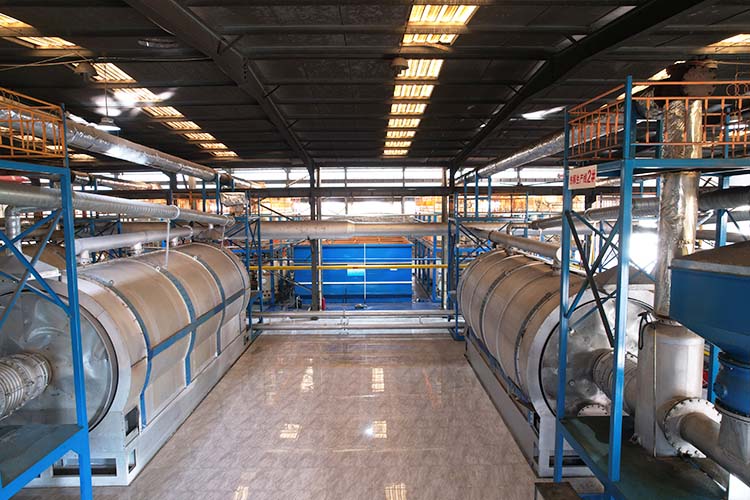
Full industry scenario coverage: At infrastructure construction sites in Vientiane and Luang Prabang, the daily processing capacity of large equipment is 12 tons, and the produced infrastructure filling materials are directly supplied to road paving and building foundation engineering. Pyrolysis oil is used for power supply to construction site generators; In rural agricultural areas, small mobile devices have a daily processing capacity of 3 tons, processing waste tires into non-standard diesel for use in agricultural machinery. At the same time, steel wire is recycled and reused to improve resource utilization efficiency; At the recycling points along the highway, mini devices can handle waste tires on site, avoiding long-distance transportation costs and reducing outdoor accumulation pollution; In small-scale processing plants, the pyrolysis oil produced by the equipment can be powered by a self-sufficient generator, achieving energy cycling, reducing production costs, and adapting to the development needs of local small-scale industries.
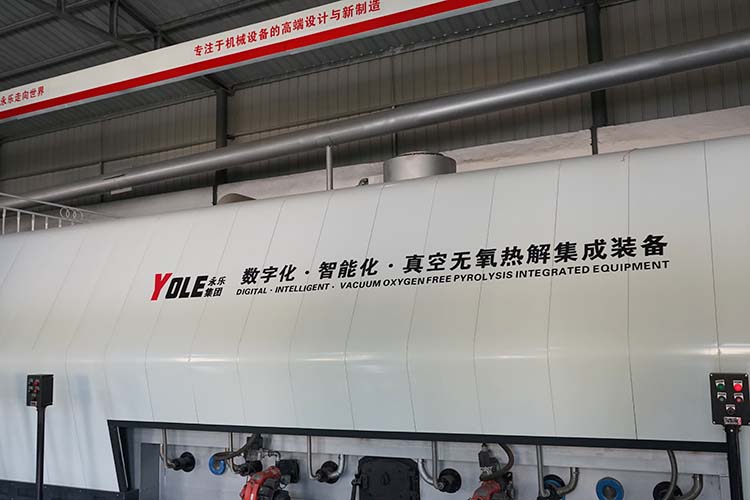
Compliance and Industry Collaboration: The equipment complies with the basic requirements of Laos' Environmental Protection Law for the harmless treatment of waste tires, and can replace illegal methods such as open burning and random stacking, helping enterprises and individuals achieve compliant disposal. Set up service stations in Vientiane, providing equipment installation, commissioning, and operation training, equipped with maintenance manuals in Lao language, clearly indicating the refining process and safety precautions; The core components are made of wear-resistant materials, suitable for high-intensity operation requirements, and vulnerable parts can be locally purchased and replaced; The equipment procurement cost is low and the effect is fast. The non-standard diesel produced can be directly connected to the local livelihood and industrial markets, helping users to quickly recover inputs. This not only solves the problem of waste tire pollution, but also fills the gap in local diesel supply, responding to the needs of Laos' circular economy development.
Yongle Environmental Protection is mainly engaged in the research and development, production and sales of complete sets of technical equipment for organic solid waste disposal and comprehensive utilization. Production and manufacturing, domestic waste treatment equipment, tire pyrolysis equipment, medical waste disposal equipment, hazardous waste disposal equipment, and achieve efficient and comprehensive utilization of resources through independently developed low-temperature anaerobic pyrolysis equipment technology solutions.
Tags:Old standard waste tire equipment for refining and regeneration suitable for people's livelihood,waste tire refining equipment,YONGLE GROUP
 Latest news