







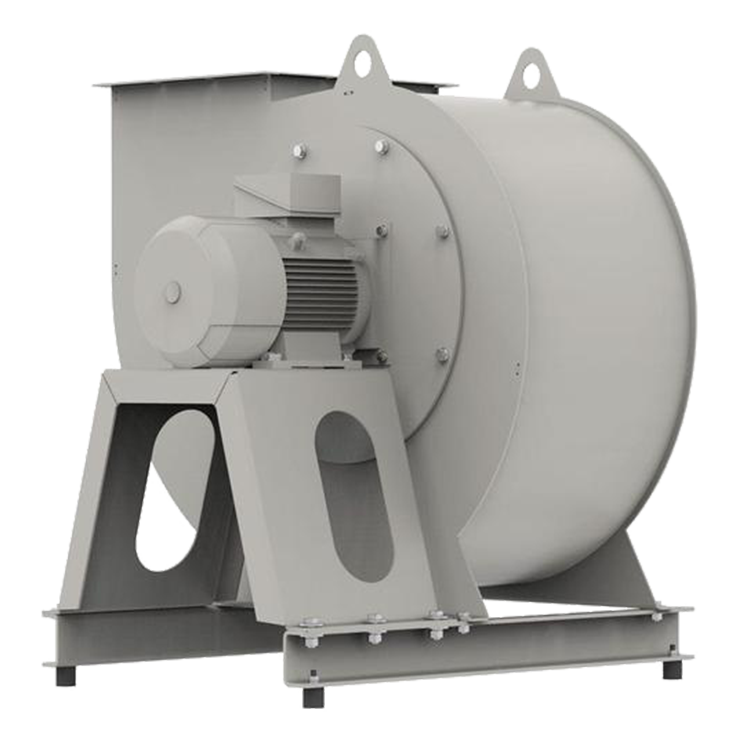
Medium pressure fan
Used to provide the medium pressure wind required inside the system. Such fans are commonly used in a variety of applications, including conveying waste, venting exhaust, and providing airflow to support incineration processes.
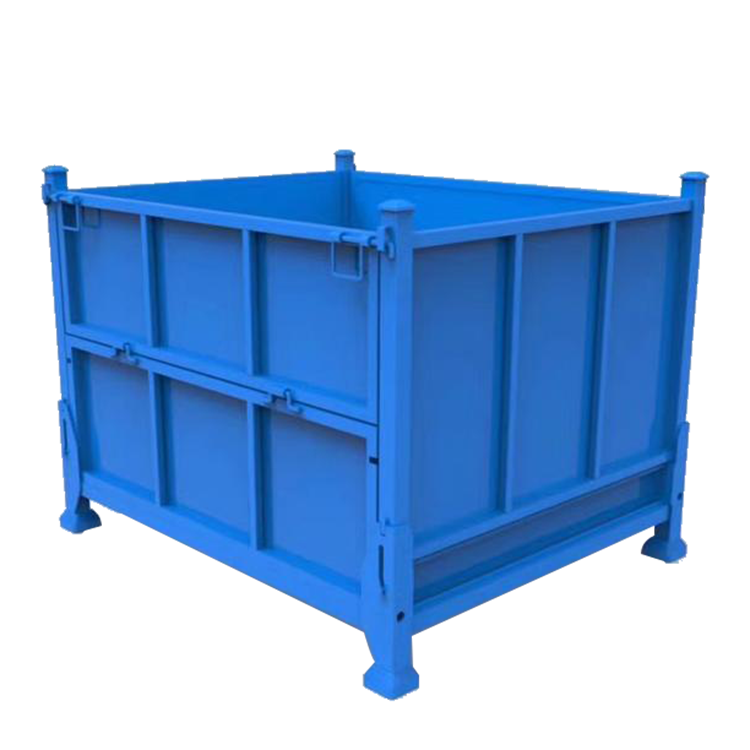
Slag bin
Used to collect solid waste or slag produced during the incineration process. During the incineration process, domestic waste will be burned to produce solid residues, which need to be effectively collected and processed to reduce environmental pollution.
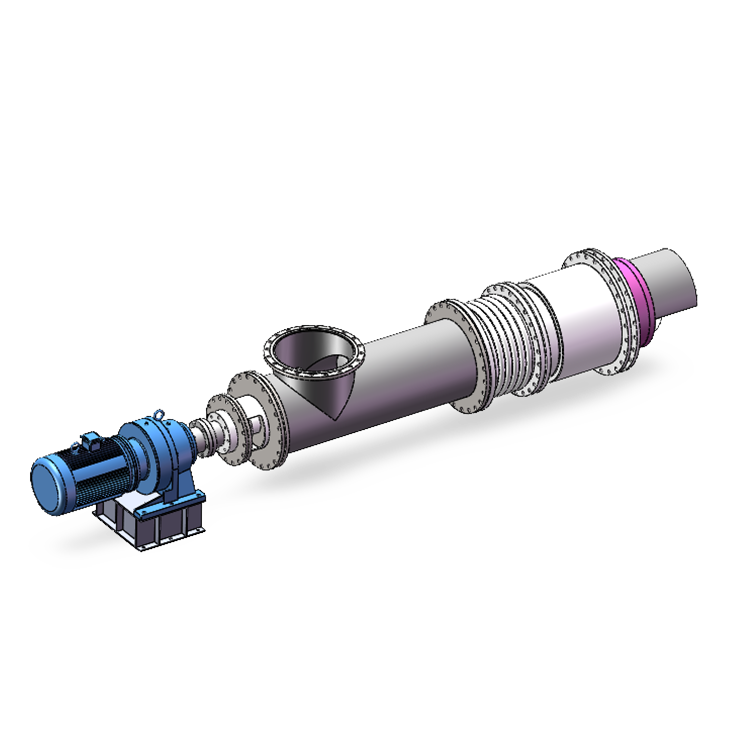
Spiral seal feeder
The U-shaped screw conveyor consists of a shaft and blades arranged along the spiral line on the shaft. Vertical screw conveyors and tubular screw conveyors belong to special screw conveyors. The casing is a circular tube, and the centrifugal force generated by the high-speed rotation of the spiral belt animal material pushes the material towards the wall of the tube, which is then pushed upwards by the blades.
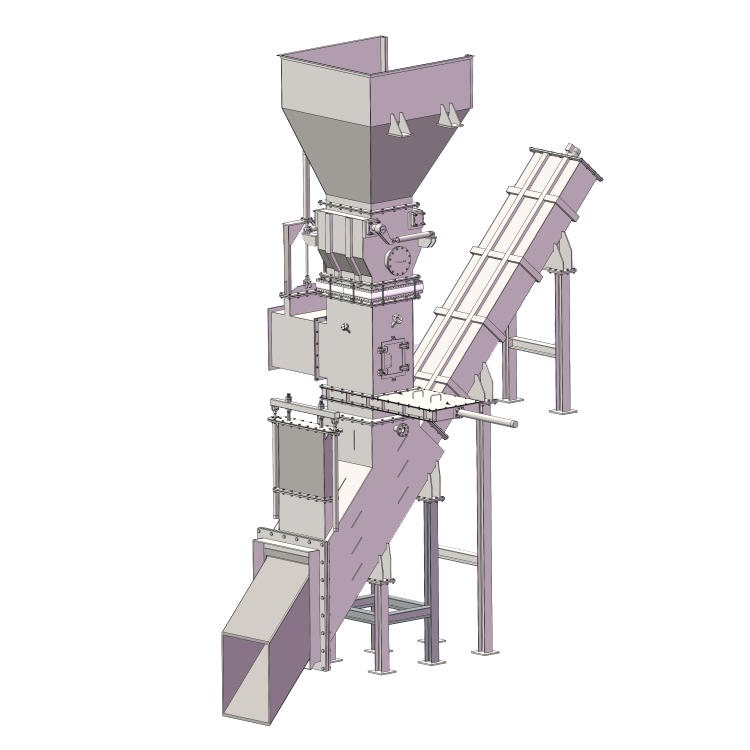
Hydraulic feeder
The hydraulic feeder is mainly used to squeeze and fill the entire converter with raw materials such as waste rubber and oil sludge. The fully automatic hydraulic feeder can achieve functions such as forward, backward, left and right lateral movement, height adjustment, and remote control of material pushing. The operation is simple and convenient, reducing manual labor and labor intensity. Shortened the loading time while also increasing the loading amount. According to the current development trend, it is already an important project for customers to renovate old equipment, which is a standard configuration on the new equipment delivery list. Here is a brief introduction to avoiding equipment failures caused by misoperation.
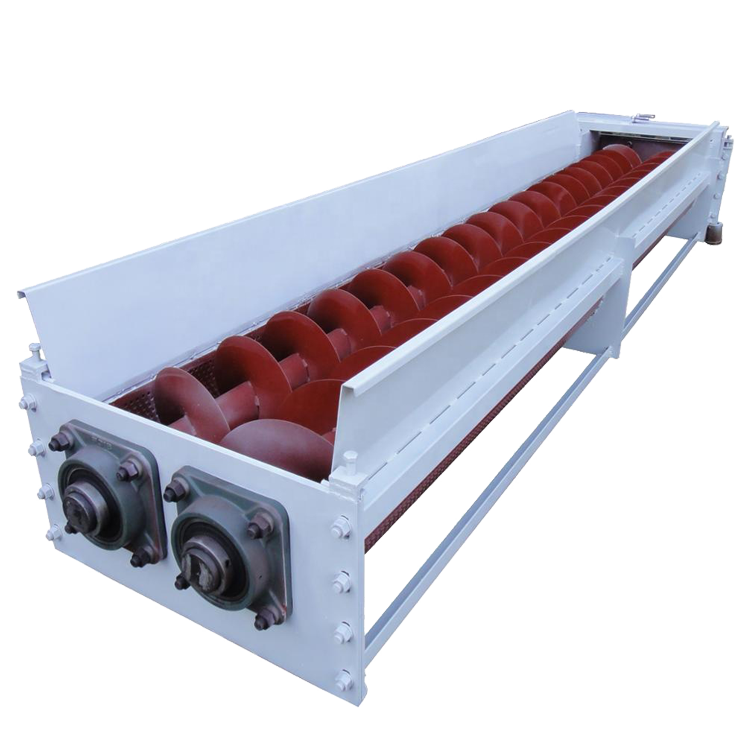
Double spiral hydraulic feeder
The double helix hydraulic feeder is a new generation product that integrates stable flow conveying, weighing and quantitative control of powder materials; Suitable for continuous measurement and batching of powder materials in various industrial production environments; Multiple advanced technologies have been adopted, ensuring reliable operation and high control accuracy; Especially suitable for continuous measurement and batching of powder materials in industries such as building materials, metallurgy, power, and chemical engineering
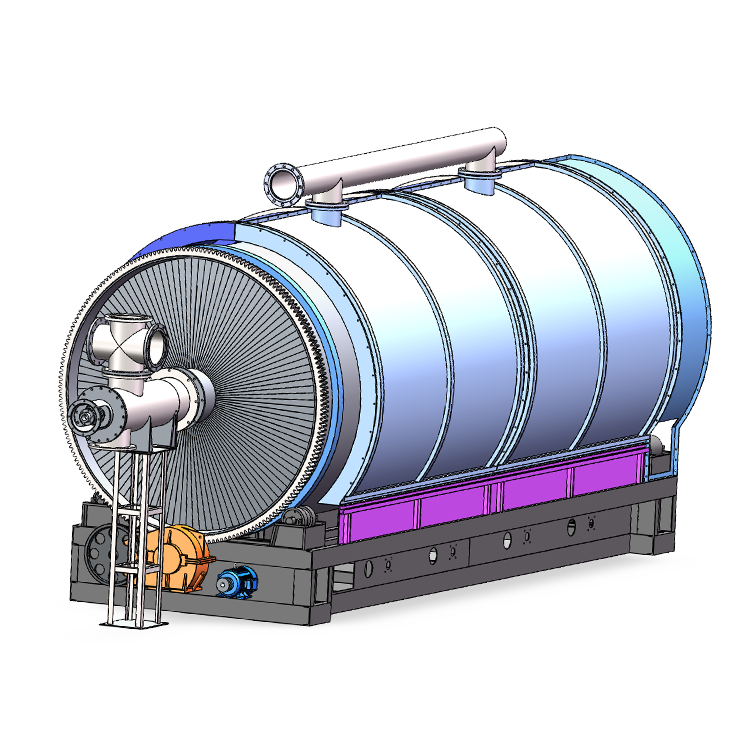
Continuous batch pyrolysis furnace
Continuous batch pyrolysis furnace is a common type of heat treatment furnace, characterized by intermittent heating process, that is, a certain amount of waste is incinerated at once. The advantage of this furnace type is that temperature control is relatively easy, it can adapt to various types of waste, and operating parameters can be flexibly adjusted to meet different treatment needs. The processing capacity of the batch pyrolysis furnace is relatively small, making it suitable for handling small waste.
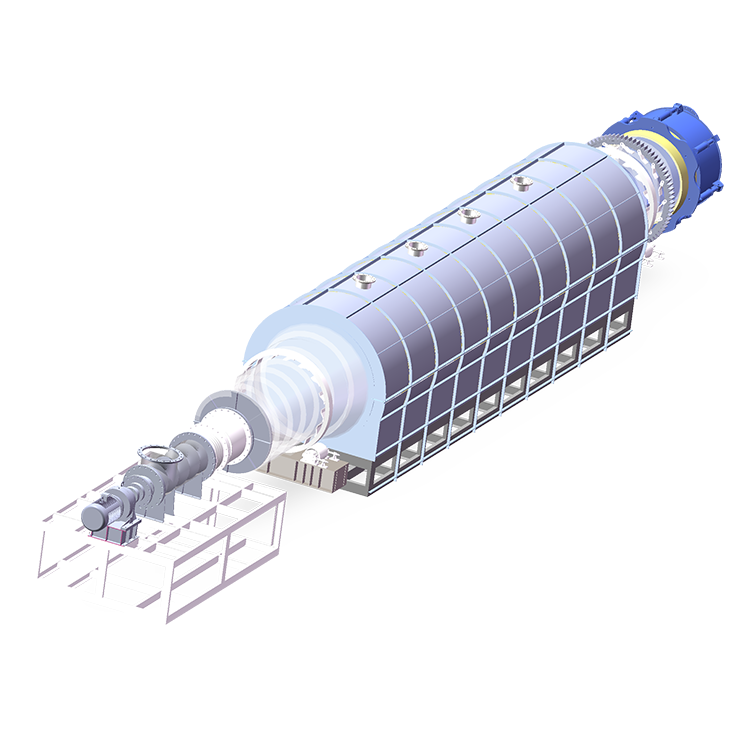
Continuous pyrolysis furnace
The advantages of a continuous pyrolysis furnace lie in its energy-saving and large-scale production characteristics. Due to its ability to achieve continuous operation, it can handle a large amount of biomass raw materials and is suitable for industrial production. Meanwhile, continuous operation also helps to stabilize the pyrolysis process and improve the consistency of product quality and yield. These characteristics make continuous pyrolysis furnaces have broad application prospects in the biomass energy industry and waste treatment fields.
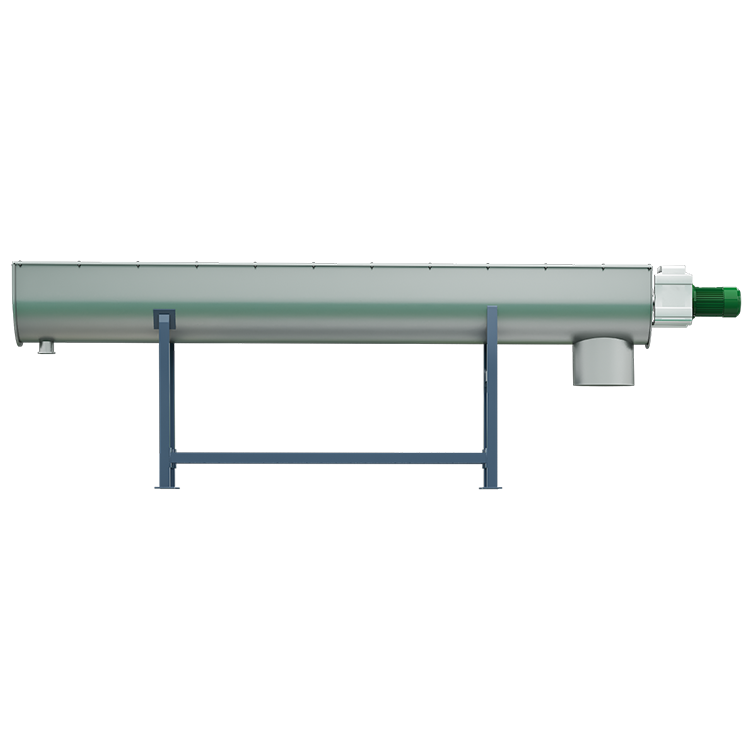
U-shaped screw machine
The U-shaped screw conveyor consists of a shaft and blades arranged along the spiral line on the shaft. Vertical screw conveyors and tubular screw conveyors belong to special screw conveyors. The casing is a circular tube, and the centrifugal force generated by the high-speed rotation of the spiral belt animal material pushes the material towards the wall of the tube, which is then pushed upwards by the blades.
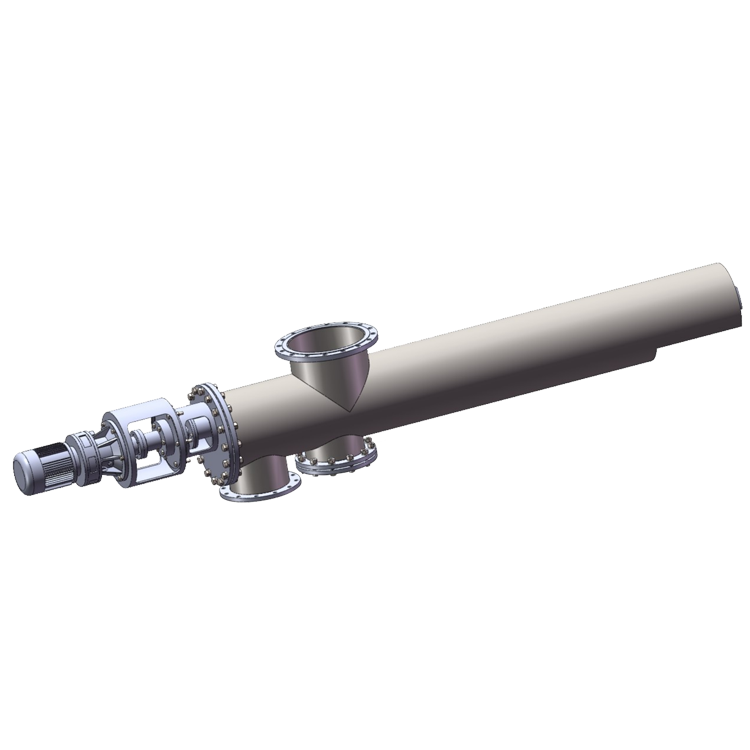
Spiral slag extractor
Spiral slag extractor is an important industrial equipment mainly used to discharge the ash generated by combustion from coal-fired boilers. This type of equipment usually consists of screw conveyors, reducers, and motors, which transport ash from the inside of the boiler to the slag outlet through the rotation of screw blades.
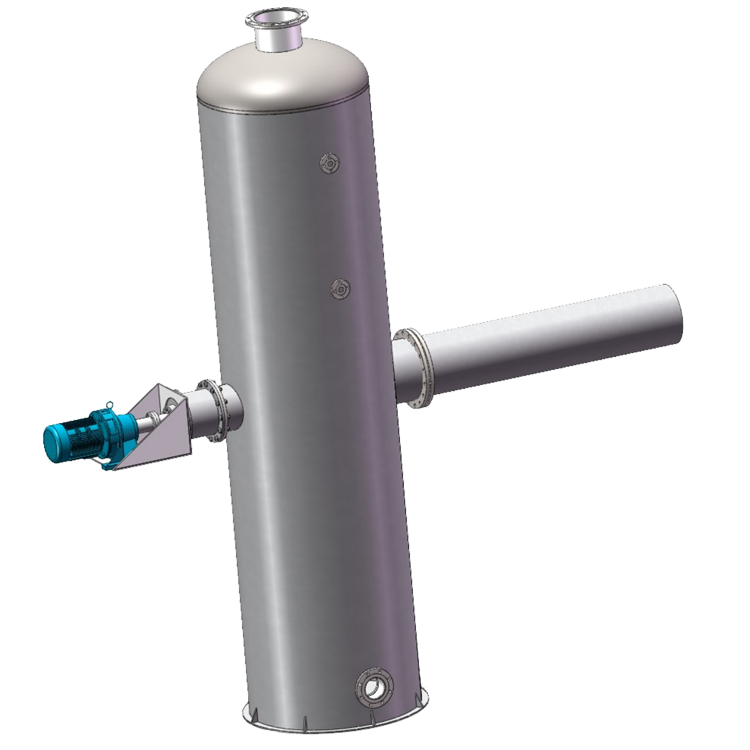
Cooling slag machine
The DL series scraper cooling slag discharge machine is composed of a drum, a rotating system, a driving mechanism, a slag inlet device, a slag outlet device, a cooling water system and an electrical control device, and a slag inlet pipe component
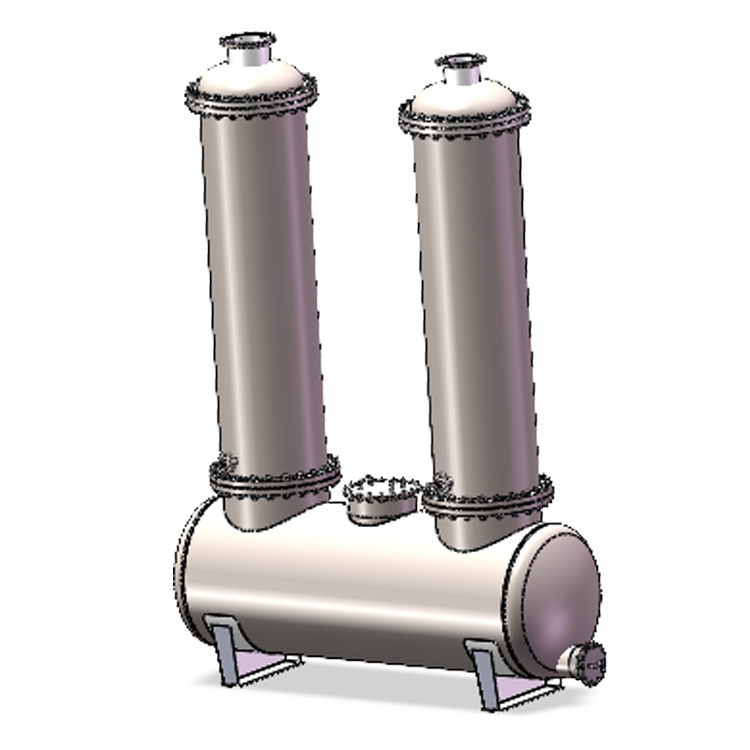
Vertical condenser
The cylinder of the vertical condenser is installed upright on the water storage tank. After the cooling water enters the pipeline from the top water distribution tank, it flows downward in a film like manner along the wall, and the flowing water is concentrated in the pool below. The refrigerant vapor enters from the upper part of the cylinder, releases heat, and condenses into a liquid outside the pipe, which is discharged from the bottom. Cooling water goes through the tube side, while refrigerant goes through the shell side. That is, high-temperature and high-pressure refrigerant vapor cools, condenses, and converges on the outer surface of the heat transfer tube to the shell guide nozzle.
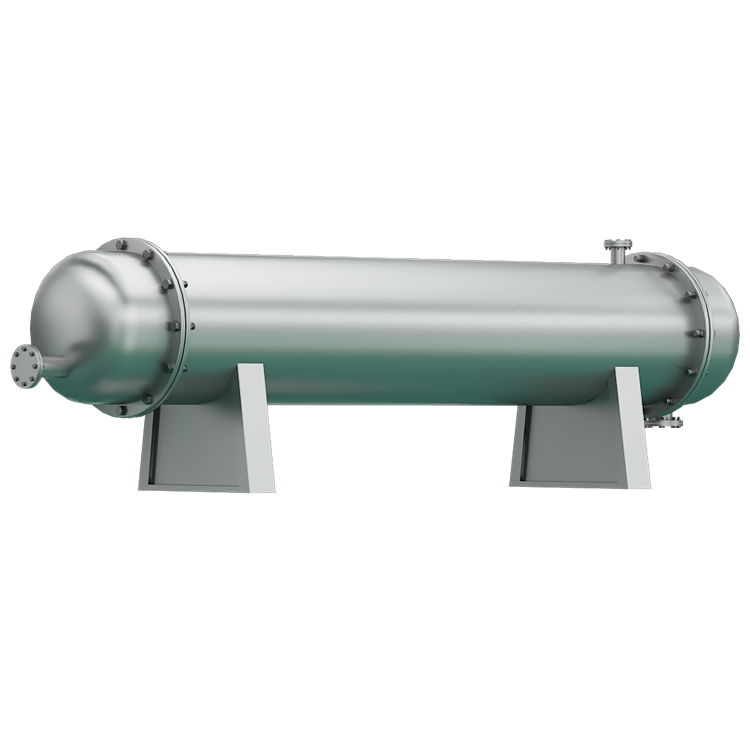
Horizontal condenser
Horizontal condenser is a common heat exchange equipment widely used in fields such as chemical, pharmaceutical, metallurgical, food, textile, etc. Its main function is to restore residual gases or vapors, thereby reducing losses and pollution. The working principle of a horizontal condenser is to use cooling water to flow inside the condenser tube, taking away the heat of gas or steam, thereby condensing the gas or steam into a liquid. A horizontal condenser mainly consists of a shell, cooling water inlet and outlet, condenser tube bundle, support plate, insulation layer, etc. Among them, the shell is the outer shell of the condenser, usually made of high-quality steel plates welded together; Cooling water inlet and outlet are used to connect cooling water pipelines; The condenser bundle is the core component of the condenser, composed of multiple copper or steel pipes, used for heat transfer; The support plate is used to support the tube bundle and prevent its deformation; The insulation layer is used to reduce heat loss.


Yongle Equipment
Yongle Equipment

 FACEBOOK
 LINKYIN

Copyright Reserved 2024 Yongle
