



 2026-01-30
The Indian automotive industry is rapidly expanding, with a continuous increase in the number of motor vehicles. Tire production is expected to double in the next decade. The engineering construction, agricultural machinery, and road transportation industries consume about 8.5 million tires annually, generating approximately 92000 tons of waste tires (ELTs) annually. Currently, the recycling of waste tires in India is fragmented, mainly led by informal operators, with weak traceability, inconsistent standards, and limited value recovery. Most waste tires are mainly piled up in the open air and easily burned, polluting the soil and atmospheric environment and violating CPCB environmental protection regulatory requirements. According to India's Environmental Protection Act of 1986 and the latest recommendations from NITI Aayog (National Transitional Council of India), India is tightening regulations on the management of waste tires, improving the Extended Producer Responsibility (EPR) framework, requiring tire manufacturers, importers, and recyclers to jointly bear the responsibility of waste tire disposal, mandating high-value recycling of waste tires, requiring pyrolysis equipment to install Online Continuous Emission Monitoring Systems (OCEMS), limiting the use of pyrolysis oil (TPO) in refineries and specific industrial scenarios, promoting the refining of carbon black into recycled carbon black (RCB), and improving resource utilization. It is urgent to have processing equipment that meets EPR requirements, is low-cost, efficient, and meets local recycling needs.
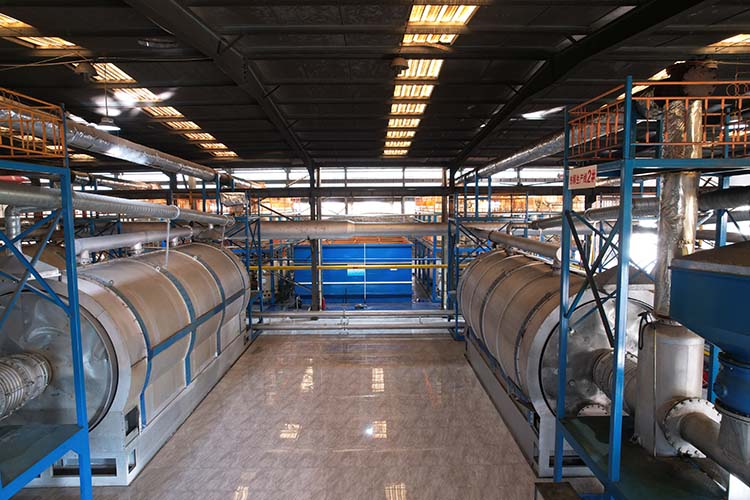
China Yongle Environmental Protection Engineering customizes the "Printed EPR Compliant High Value Recycling" waste tire processing equipment: strictly in line with NITI Aayog's recommendations and CPCB regulatory requirements, the pre-treatment stage adopts an integrated system of "intelligent sorting hydraulic precision cutting magnetic separation", optimizing tungsten steel cutting tools to adapt to various types of tires (engineering tires, agricultural machinery tires, passenger tires), with a steel wire separation rate of 99.97%. The separated steel wire can be recycled and reused, meeting local resource recycling standards. The core adopts the "high-temperature pyrolysis+high-value refining" technology, equipped with an online continuous emission monitoring system (OCEMS) to monitor exhaust emissions in real time, ensuring compliance with environmental standards. The pyrolysis temperature is controlled at 820 ℃, and the produced pyrolysis oil (TPO) can be directly supplied to refineries for refining, with a purity of 98.5%. After refining, the carbon black is converted into recycled carbon black (RCB), which can be used for tire reproduction and rubber product processing. Recycled rubber is used for infrastructure waterproofing and agricultural machinery parts, with an overall resource utilization rate of 98.8%, perfectly adapting to the high-value regeneration requirements under the EPR framework. The equipment adopts a dual drive system of power grid and diesel, suitable for unstable electricity scenarios in India. It is equipped with bilingual operation interfaces in Hindi and English, and can upload and process data in real time to the EPR supervision platform, facilitating the traceability of producer responsibilities, optimizing operation processes, and adapting to the current situation of insufficient local technical talents.
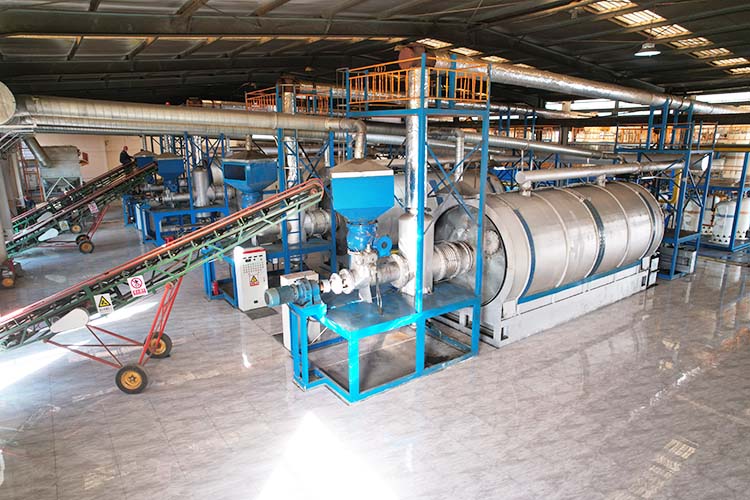
Full industry scenario coverage: In the waste tire recycling parks in New Delhi and Mumbai, large equipment with a daily processing capacity of 65 tons operates in clusters to form a closed loop of "waste tire pyrolysis oil RCB recycled products". The pyrolysis oil is directly supplied to local refineries, and RCB connects with tire manufacturers to help enterprises fulfill their EPR responsibilities; At the infrastructure construction site in Bangalore, mobile devices are used to process engineering waste tires on site, and the regenerated rubber produced is used for road waterproofing membranes and foundation fillers to meet the demand for infrastructure acceleration; In rural agricultural areas, the daily processing capacity of small equipment is 18 tons. Waste tires are processed into agricultural machinery parts and anti-skid mats for farmland. Pyrolysis oil is used to power small generators and meet the needs of agricultural machinery operations; At the recycling points along the highway, mini devices can process waste tires on site, avoiding open-air accumulation and long-distance transportation costs, while completing data uploading, in line with EPR traceability requirements; In the tire production plant area, supporting equipment can directly process production waste, achieve the integration of "production recycling regeneration", improve resource utilization, and reduce production costs.
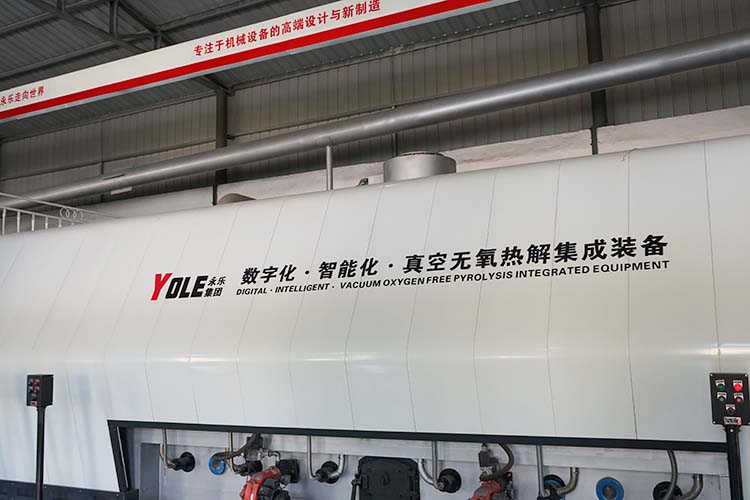
Compliance and Industry Collaboration: The equipment strictly conforms to the EPR framework and NITI Aayog's recommendations, equipped with an OCEMS monitoring system to limit the high-value utilization of pyrolysis oil, assist enterprises in completing EPR certification and filing, and enjoy tax exemptions and policy support. Set up service stations in New Delhi and Mumbai, providing equipment installation and commissioning, EPR compliance guidance and operation training, equipped with Hindi maintenance manuals, clearly indicating the compliant utilization process of pyrolysis oil and RCB; The core components are made of wear-resistant materials, suitable for high-intensity operation requirements, and vulnerable parts can be locally purchased and replaced; The equipment procurement cost is low and the results are fast. The high-value recycled products produced can directly connect with local tire production, oil refining, and infrastructure markets, helping users quickly recover their inputs. At the same time, it promotes the standardization and formalization of the waste tire recycling industry, reduces pollution problems caused by informal operations, and responds to India's circular economy development strategy.
Yongle Environmental Protection is mainly engaged in the research and development, production and sales of complete sets of technical equipment for organic solid waste disposal and comprehensive utilization. Production and manufacturing, domestic waste treatment equipment, tire pyrolysis equipment, medical waste disposal equipment, hazardous waste disposal equipment, and achieve efficient and comprehensive utilization of resources through independently developed low-temperature anaerobic pyrolysis equipment technology solutions.
Tags:Indian waste tire equipment equipped with OCEMS for monitoring emissions,waste tire refining equipment,YONGLE GROUP
 Latest news