


 2026-02-03
The Malaysian automotive industry is developing rapidly, with an annual tire import volume of 3.53 billion ringgit, an annual consumption of about 8.5 million tires, and an annual production of about 95000 tons of waste tires. Currently, the country's waste tire management system is relatively scattered, lacking a unified national collection and disposal system. Most waste tires are disposed of by informal operators, and there are problems such as open-air accumulation and easy incineration, which pollute the soil and atmospheric environment, and violate the environmental protection regulatory requirements of the Ministry of Environment (DOE). According to Malaysia's 1974 Environmental Quality Act and the trend of ASEAN tire recycling reform, the country is gradually improving the Extended Producer Responsibility (EPR) framework. The Malaysian Rubber Board (LGM) and the Malaysian Rubber Council (MRC) are promoting high-value recycling of waste tires, focusing on the development of recycled carbon black (RCB), desulfurized rubber and other products, which are applied in road construction, building materials, footwear and other fields. At the same time, the import management of waste tires is standardized. Importing enterprises need to pass environmental impact assessments, obtain disposal qualifications and import permits, and accept joint inspections by DOE and the maritime authorities. The current market urgently needs processing equipment that meets EPR requirements, is low-cost, efficient, and meets local recycling needs, to promote the standardized and large-scale development of the waste tire recycling industry, and to achieve a closed-loop resource utilization of waste tires.
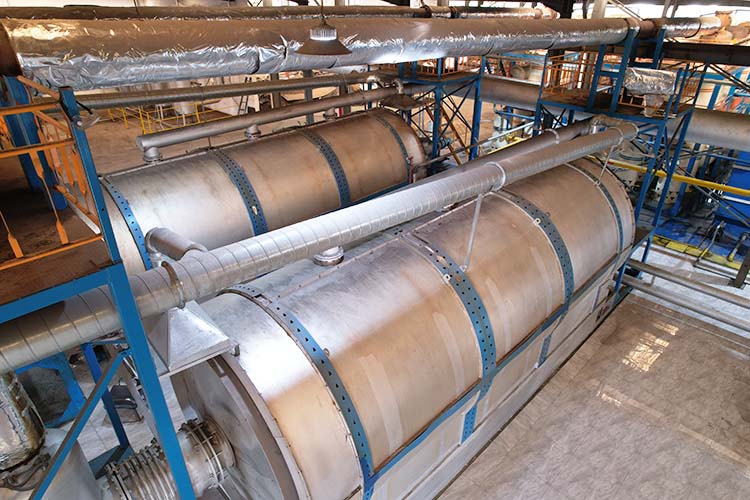
China Yongle Environmental Protection Engineering customizes the "Ma Biao EPR compliant high-value recycled tire" waste tire processing equipment: strictly in line with DOE regulatory requirements and EPR framework, the pre-treatment stage adopts an integrated system of "intelligent sorting hydraulic precision cutting magnetic separation", optimizes tungsten steel cutting tools to adapt to various types of tires (engineering tires, passenger tires, commercial tires), with a steel wire separation rate of 99.95%. The separated steel wire can be recycled and reused, in line with local resource recycling standards, and also adapts to relevant standards for refurbished tires (MS 224, UN R108, UN R109), which can help enterprises carry out tire renewal business. The core adopts the "high-temperature pyrolysis+high-value refining" technology, equipped with an online continuous emission monitoring system (OCEMS) to monitor exhaust emissions in real time, ensuring compliance with environmental standards. The pyrolysis temperature is controlled at 800 ℃, and the produced pyrolysis oil can be directly supplied to refineries for refining, with a purity of 98.2%. The carbon black is converted into recycled carbon black (RCB) after refining, which can be used for tire reproduction, rubber product processing, and recycled rubber is used for infrastructure waterproofing, road filling, etc. The overall resource utilization rate reaches 98.5%, perfectly adapting to the high-value regeneration requirements under the EPR framework. The equipment adopts a dual drive system of power grid and diesel, adapted to the unstable electricity situation in Malaysia. It is equipped with a bilingual operation interface in Malay and English, and can upload and process data in real time to the EPR supervision platform for the purpose of fulfilling producer responsibility traceability, optimizing the operation process, and adapting to the current situation of insufficient local technical talents.
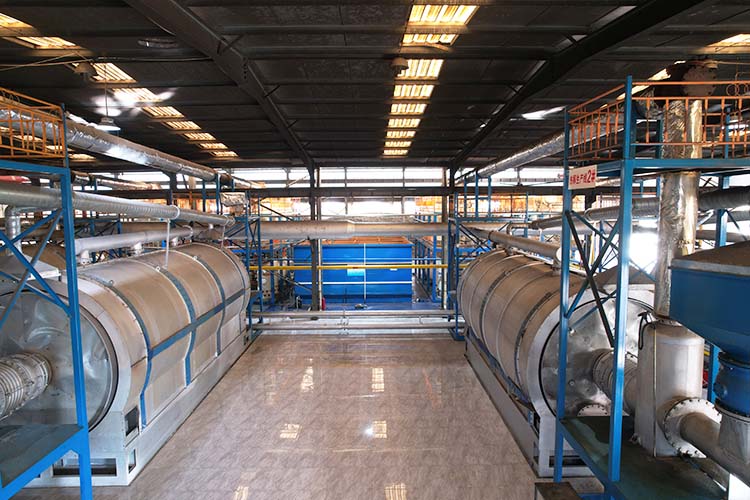
Full industry scenario coverage: In the waste tire recycling parks in Kuala Lumpur and Penang, large equipment with a daily processing capacity of 60 tons operates in clusters to form a closed loop of "waste tire pyrolysis oil RCB recycled products". The pyrolysis oil is directly supplied to local refineries, and RCB connects with Malaysian rubber companies to help them fulfill their EPR responsibilities. At the same time, it participates in the pilot promotion of green products such as prefabricated rubber wall panels; At the Klang Valley construction site, mobile devices are used to process engineering waste tires on site, and the regenerated rubber produced is used for road waterproofing membranes and foundation fillers to meet the local demand for faster infrastructure construction; In rural agricultural areas, the daily processing capacity of small equipment is 16 tons. Waste tires are processed into anti-skid mats for farmland and agricultural machinery accessories, and pyrolysis oil is used for small generators to meet the needs of agricultural machinery operations; At the recycling points along the highway, mini devices can process waste tires on site, avoiding open-air accumulation and long-distance transportation costs, while completing data uploading, in line with EPR traceability requirements; In tire import and disposal enterprises, supporting equipment can be integrated with the import inspection process to achieve the integration of waste tire import, disposal, and regeneration, and help enterprises operate in compliance.
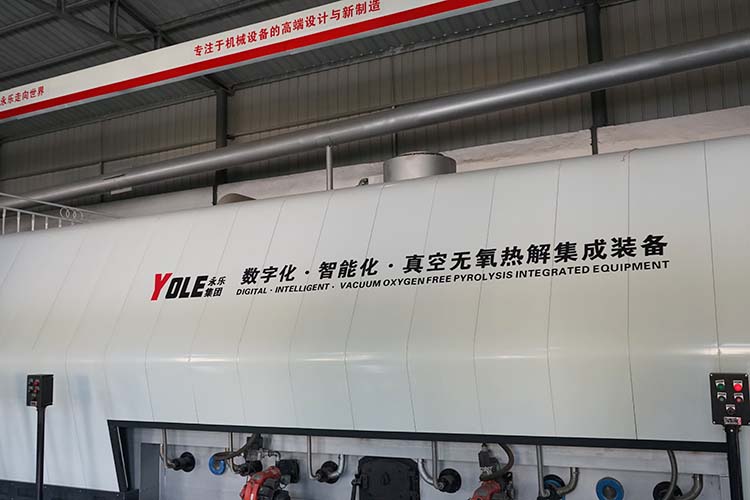
Compliance and Industry Collaboration: The equipment strictly complies with the EPR framework and DOE regulatory requirements, equipped with an OCEMS monitoring system to assist enterprises in completing EPR certification and filing, and enjoys financial support related to automation and green technology initiatives. Set up service stations in Kuala Lumpur, providing equipment installation and commissioning, EPR compliance guidance and operation training, equipped with Malay language maintenance manuals, clearly indicating the compliant utilization process of pyrolysis oil and RCB; The core components are made of wear-resistant materials, suitable for high-intensity operation requirements, and vulnerable parts can be locally purchased and replaced; The equipment procurement cost is low and the results are fast. The high-value recycled products produced can directly connect with local tire production, oil refining, and infrastructure markets, helping users quickly recover their inputs. At the same time, it promotes the transformation of the waste tire recycling industry from informal to formal and standardized, reduces pollution problems, and responds to Malaysia's circular economy development strategy and the trend of ASEAN tire recycling reform.
Yongle Environmental Protection is mainly engaged in the research and development, production and sales of complete sets of technical equipment for organic solid waste disposal and comprehensive utilization. Production and manufacturing, domestic waste treatment equipment, tire pyrolysis equipment, medical waste disposal equipment, hazardous waste disposal equipment, and achieve efficient and comprehensive utilization of resources through independently developed low-temperature anaerobic pyrolysis equipment technology solutions.
Tags:Ma Biao Waste Tire Equipment EPR Compliant High Value Regeneration,waste tire refining equipment,YONGLE GROUP
 Latest news