


 2026-01-30
The oil and gas industry in India is gradually rising, with oil field extraction, refining and processing, port oil tanker operations, and small refining workshops producing about 68000 tons of oily sludge annually, with an oil content of 32% -65%, mixed with impurities such as crude oil residue, sand particles, and oil pollution. Among them, hazardous sludge such as synthetic oil-based drilling mud and drilling cuttings account for a relatively high proportion. The Ganges River, Yamuna River and other water systems are the core ecological and agricultural lifelines of India. The arbitrary discharge and simple disposal of oily sludge will seriously pollute water and soil, violating the requirements of the 1986 Environmental Protection Act and CPCB regulation. According to relevant standards, the oil recovery rate of oily sludge must be ≥ 95%, and the treated wastewater must meet the discharge requirements of pH 5.5-9.0 and oil and grease ≤ 10mg/L. The residual oil content should be ≤ 0.3%, and it can be used for soil improvement or safe landfill. At present, the treatment process of oily sludge in India is rudimentary, mostly using natural sedimentation, simple incineration and other methods. There are problems such as low oil recovery rate, serious secondary pollution, easy wall sticking of equipment, and short service life. It is urgent to develop efficient treatment equipment that is suitable for humid and hot environments, anti wall sticking, low-cost and meets the needs of the local oil and gas industry.
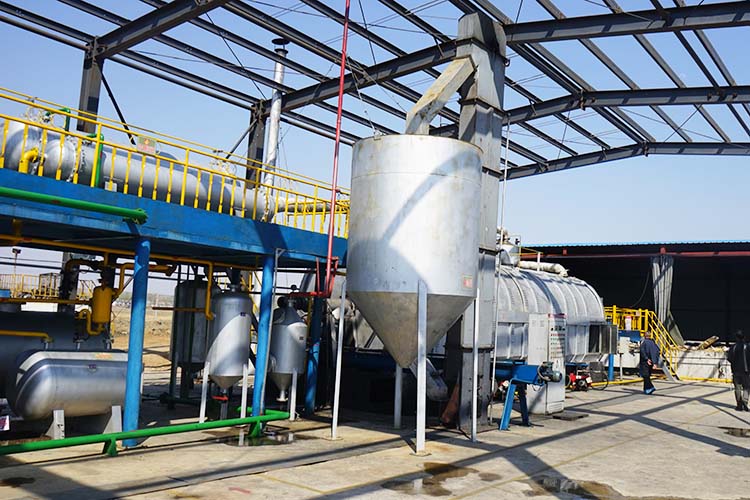
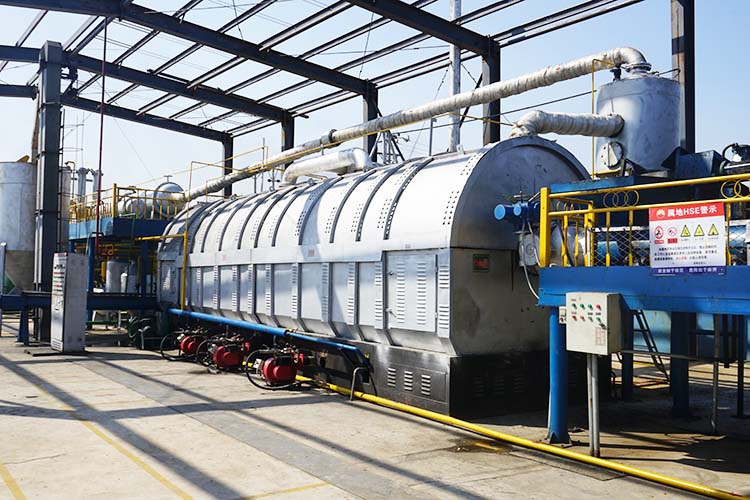
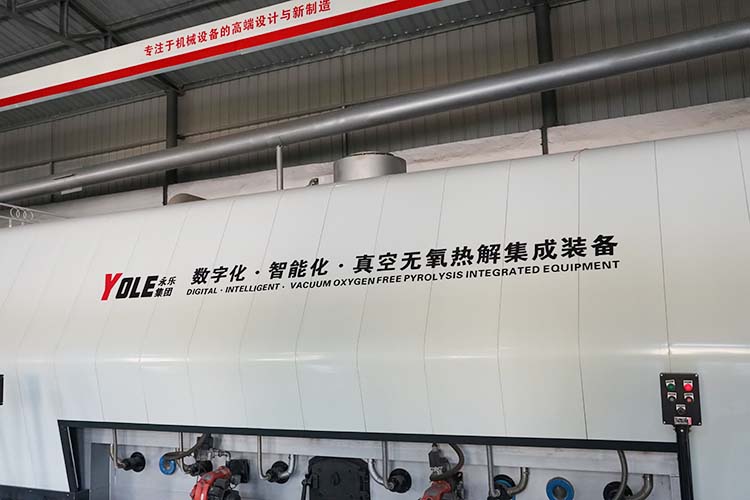
China Yongle Environmental Protection Engineering has developed the "Indian Standard Anti stick Wall Efficient Pyrolysis" oily sludge treatment equipment: Referring to international advanced pyrolysis technology, targeting the characteristics of Indian oily sludge and the pain points of equipment wall sticking, it adopts a titanium alloy anti-corrosion and anti stick compartment+fully enclosed negative pressure pyrolysis structure, which can withstand high temperature, high humidity and saline alkali working conditions, effectively solving the problems of sludge wall sticking and equipment wear during pyrolysis process, and extending the service life of equipment to 8.5 years. The core is equipped with a triple process of "multi-stage screening+high-temperature anaerobic pyrolysis+oil-water separation". Firstly, 99.8% of sand particles and metal debris are removed through intelligent screening, reducing the difficulty of pyrolysis. Then, the oil is separated by 880 ℃ high-temperature anaerobic pyrolysis, with an oil recovery rate of 96.2%. The recovered oil can be directly sent back to refineries for refining or used as industrial fuel. The combustible gas produced by pyrolysis consumes 48% of the energy, achieving energy cycling; After deep purification treatment, the exhaust gas meets the standard for discharge. The treated wastewater meets the CPCB discharge standard and can be recycled for cleaning or discharged into green belts. The residual oil content is ≤ 0.28% and can be used for soil improvement or safe landfill without secondary pollution, fully meeting local environmental protection requirements.
Adaptation to the entire industry chain scenario: In the oil field operation area in western India, mobile devices are deployed with drilling platforms, with a daily processing capacity of 55 tons, specifically for the disposal of synthetic oil-based drilling mud and drilling cuttings, to avoid soil pollution caused by sludge transportation leaks. The processing data is uploaded in real-time to the CPCB supervision platform; At the refineries in New Delhi and Mumbai, large-scale centralized equipment with a daily processing capacity of 120 tons is linked with the plant's oil supply system to form a "sludge oil energy" closed loop, improving resource utilization and reducing production costs; At the coastal ports of Mumbai and Kolkata, modular equipment with a daily processing capacity of 80 tons is used to handle oil tanker cleaning sludge on site. Efficient anti leakage design is adopted to prevent pollution of the sea area and the Ganges River system, safeguarding core ecological security; In small oil refining workshops, mini equipment with a daily processing capacity of 10 tons is low-cost and easy to operate. The oil recovery income can quickly cover the investment and meet the operational needs of small workshops; Around the oil depot, small-scale equipment is used to complete sludge treatment on site, reducing storage and transportation costs and avoiding oil pollution of groundwater.
Exclusive service guarantee: The equipment has passed the CPCB full compliance audit and the Indian petroleum industry environmental certification, adapted to local oily sludge treatment standards and emission requirements, and assisted enterprises in completing compliance filing. Establish service bases in New Delhi, Mumbai, and western oil fields to reserve oil resistant, corrosion-resistant, and anti sticking core spare parts, achieve 24-hour maintenance response in core areas, and provide on-site maintenance services for remote oil fields; Provide bilingual operation training and process guidance in Hindi and English, simplify maintenance processes, adapt to local operation and maintenance levels, and focus on training cleaning and maintenance skills for anti stick wall compartments; The equipment procurement cost is only 52% of similar products in Europe and America, and the profit from oil recovery and energy self-sufficiency can cover the investment within 7 months. At the same time, the anti sticking wall design is optimized to reduce equipment failures, lower operation and maintenance costs, help the green development of India's oil and gas industry, safeguard the ecological security of the Ganges and Yamuna rivers, and promote the harmless and resourceful disposal of oily sludge.
Yongle Environmental Protection is mainly engaged in the research and development, production and sales of complete sets of technical equipment for organic solid waste disposal and comprehensive utilization. Production and manufacturing, domestic waste treatment equipment, tire pyrolysis equipment, medical waste disposal equipment, hazardous waste disposal equipment, and achieve efficient and comprehensive utilization of resources through independently developed low-temperature anaerobic pyrolysis equipment technology solutions.
Tags:Anti stick wall efficient pyrolysis of printing ink equipment,Oil sludge treatment equipment,YONGLE GROUP
 Latest news