


 2026-01-27
The United Arab Emirates has implemented the "Waste Energy Recycling Zero Landfill" strategy in accordance with the Federal Comprehensive Waste Management Law No. 12 of 2018 and the regulations of each emirate. Core cities such as Dubai and Abu Dhabi aim to achieve zero landfill of household waste by 2040, while emirates such as Sharjah have implemented a 100% landfill diversion plan. Currently, the daily production of household waste in the country is about 180000 tons, and high-density urban areas in Dubai and Abu Dhabi are facing pressure for centralized waste treatment, with high transportation costs in remote desert areas. Organic waste accounts for 38% of the garbage, containing a large amount of catering residues and food processing by-products. The entire area belongs to a tropical desert climate, with high temperatures of up to 50 ℃ in summer and frequent sandstorms. The equipment has strict requirements for heat resistance, dust resistance, and low consumption, and needs to meet the integration needs of clean energy and infrastructure.
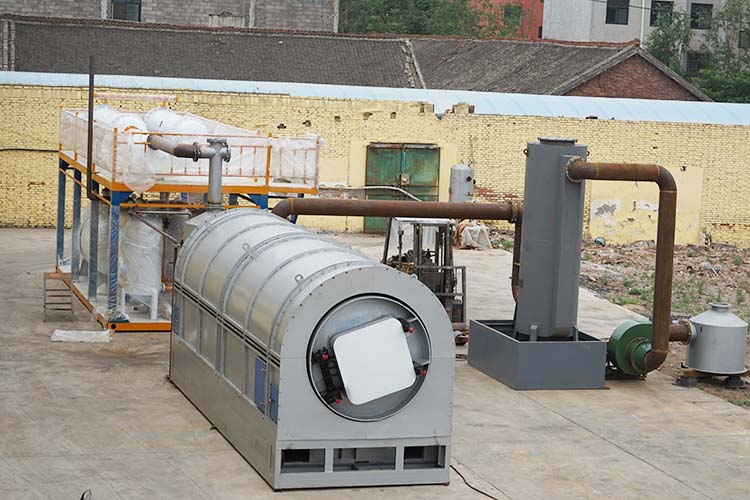
China Yongle Environmental Protection Engineering has developed a targeted "A-Standard Heat resistant and Dust resistant" household waste treatment equipment: using a titanium alloy anti-corrosion cabin and a high-temperature sealing system, it can withstand extreme high temperatures of 60 ℃, equipped with multiple dust-proof filtration modules, fully adapted to desert climates, and emission indicators meet the UAE federal environmental standards. It has been registered with both Tadweer Abu Dhabi and Dubai City Hall. Equipped with a "solar natural gas dual drive+intelligent energy storage module", the solar panels are adapted to strong sunlight conditions, and the energy storage system can ensure continuous operation at night and in dusty weather. It is equipped with a bilingual operation interface in Arabic and English, and can upload and process data in real time to the local environmental protection supervision platform. The core adopts the technology of "high-temperature anaerobic fermentation+energy recovery". Organic waste can be fermented for 8 days to produce biogas (methane content ≥ 63%), which can be directly connected to the local energy pipeline for power generation or heating. The fermentation residue is solidified and used as building materials. Dry waste sorting and recycling can be recycled, and the overall resource utilization rate reaches 84%.
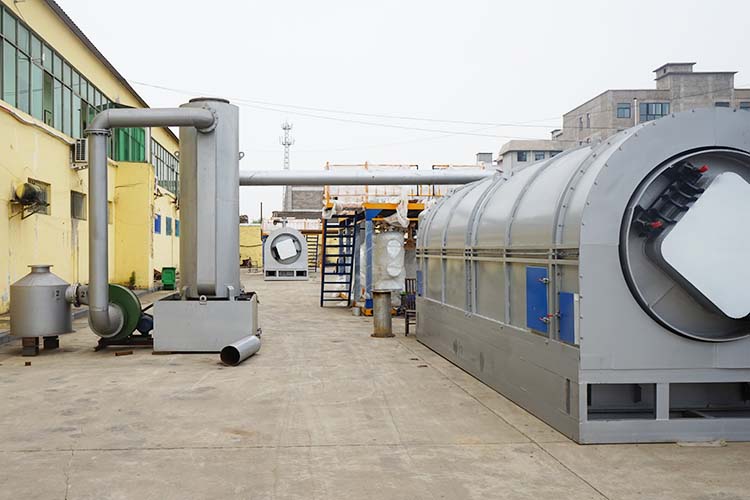
Adapting to the needs of the United Arab Emirates: At the waste energy plant in the Vasan district of Dubai, the cluster equipment has a daily processing capacity of 200 tons, helping to achieve a "waste energy" closed loop and reducing carbon dioxide emissions by over 40000 tons annually; In the urban area of Abu Dhabi, the daily processing capacity of small equipment is 80 tons, and it is precisely connected to the classification and recycling system to avoid the spread of garbage deterioration and odor under high temperature; At the Bee'ah Waste Management Center in Sharjah, modular equipment is integrated into the full chain recycling network, and the produced building materials are directly supplied to local infrastructure projects; In remote settlements in the desert, mobile devices are independently driven by natural gas, with a daily processing capacity of 12 tons, and can operate stably without relying on the power grid.
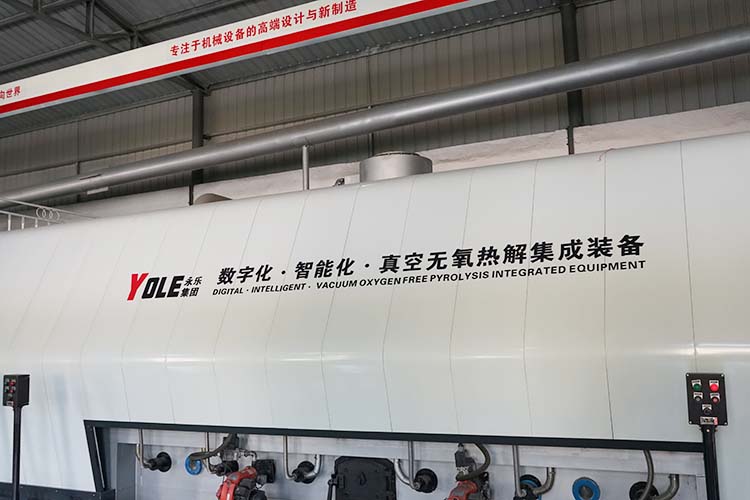
Local compliance and service guarantee: The equipment has been included in the Dubai Clean Energy Strategic Procurement List and enjoys import tariff reductions. Set up service centers in Dubai and Abu Dhabi, reserve heat-resistant and dust resistant core spare parts, achieve 2-hour maintenance response in core cities, and provide helicopter emergency support services in desert areas. Providing bilingual operation training and interpretation of UAE environmental regulations, the energy consumption of equipment operation is 48% lower than traditional equipment, which can help enterprises participate in carbon credit trading and deeply adapt to the UAE's dual strategy of zero landfill and clean energy.
Yongle Environmental Protection is mainly engaged in the research and development, production and sales of complete sets of technical equipment for organic solid waste disposal and comprehensive utilization. Production and manufacturing, domestic waste treatment equipment, tire pyrolysis equipment, medical waste disposal equipment, hazardous waste disposal equipment, and achieve efficient and comprehensive utilization of resources through independently developed low-temperature anaerobic pyrolysis equipment technology solutions.
Tags:Adaptation of UAE's zero landfill strategy to address waste challenges,household waste treatment equipment,YONGLE GROUP
 Latest news