


 2026-01-23
The petroleum processing, machinery manufacturing, and port logistics industries in South Korea are well-developed. The Seoul Bay Refinery, Incheon Port, and Central Industrial Zone produce approximately 92000 tons of oily sludge annually, with an oil content of 30% -58%, mixed with impurities such as crude oil residue, mechanical oil pollution, and sand particles. As the core water system in South Korea, the Han River supports the supply of drinking water and ecological balance in cities such as Seoul. It has extremely strict environmental requirements for the treatment of oily sludge. According to the Water Resources Protection Law and KS K 0120 water quality standards, the oil recovery rate must be ≥ 93%, and the residual oil content after treatment must be ≤ 0.3%. Traditional pyrolysis equipment generally suffers from wall sticking, shortened lifespan, and exhaust pollution problems, and there is an urgent need for efficient anti sticking environmental protection equipment.
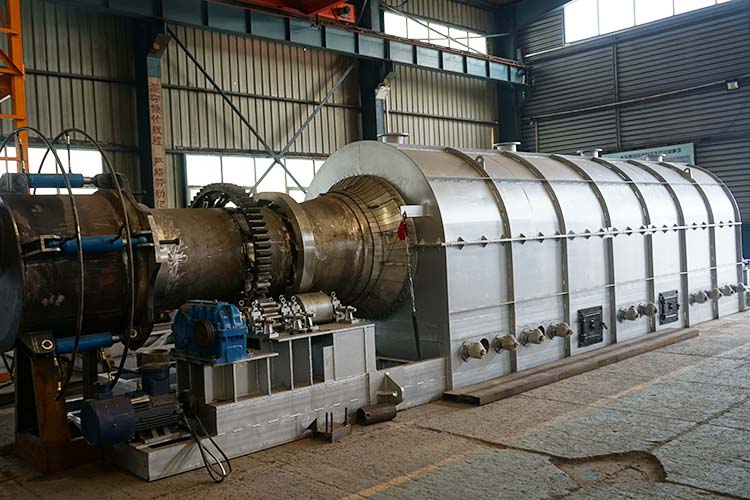
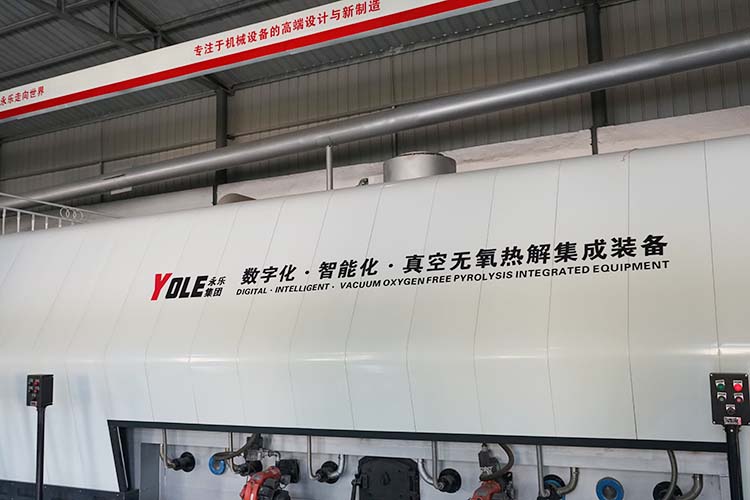
China Yongle Environmental Protection Engineering has developed the "Korean standard anti sticking wall pyrolysis" oily sludge treatment equipment: using a titanium alloy anti-corrosion chamber and a fully enclosed negative pressure pyrolysis structure, it is suitable for complex working conditions in oil fields and refineries, and the core is to overcome the pain points of sticking walls. The furnace body is equipped with an automatic scraping device and a high-temperature anti sticking coating, and the equipment's service life is extended to more than 8.5 years. It has passed KCS environmental certification. Adopting a dual process of "multi-stage screening+anaerobic pyrolysis", 99.5% of sand particles and metal debris are first removed through three-stage precision screening, and then the oil fraction is separated by anaerobic pyrolysis at 560 ℃, with an oil recovery rate of 94.8%. The recovered oil can be refined and used as industrial fuel; The combustible gas produced by pyrolysis consumes 42% of the energy, and the exhaust gas meets the KS K 0099 standard after purification treatment. The residual oil content after treatment is ≤ 0.28%, which can be used as building materials or safely buried.
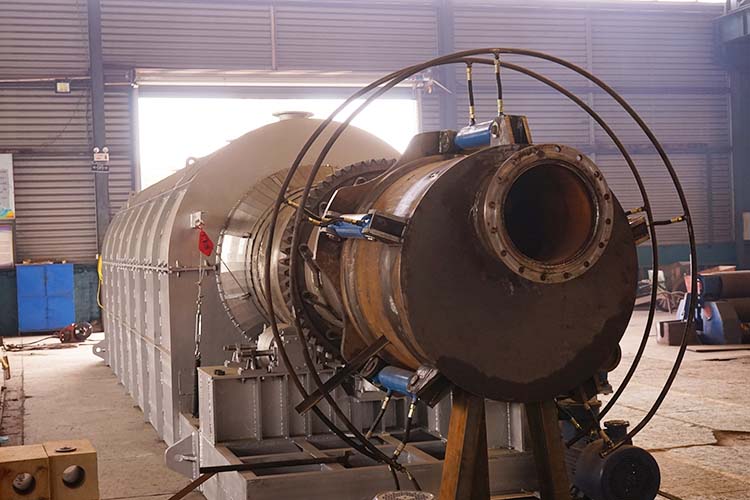
Adaptation to the entire industry chain scenario: At the Seoul Bay Refinery, the large centralized equipment has a daily processing capacity of 42 tons and is linked with the plant's fuel supply system to achieve a "sludge oil industrial fuel" cycle. The processing data is uploaded in real-time to the regulatory platform of the South Korean Environmental Agency; At Incheon Port, the daily processing capacity of mobile devices is 20 tons, following the oil tanker cleaning operation site to process sludge and avoid transportation leakage and pollution of the sea area; In the central industrial zone, modular equipment has a daily processing capacity of 38 tons, which deals with mechanical processing of oily sludge and reduces transportation and storage costs; At small gas stations, mini devices have a daily processing capacity of 5.5 tons to prevent oil sludge from polluting the surrounding soil and groundwater, and to protect the ecology of the Han River tributary.
Exclusive service guarantee: The equipment has passed KCS certification and dual audits by the South Korean Department of Environment and Water Resources, meeting the environmental access requirements of South Korea. Establish service bases in Seoul and Incheon, reserve oil resistant and corrosion-resistant spare parts and specialized anti sticking coating materials, and achieve 24-hour maintenance response; Provide Korean language operation training and process optimization services, equipped with a professional technical team to assist enterprises in solving the pain points of pyrolysis treatment; The equipment procurement cost is only 54% of similar products in South Korea, and the benefits of oil recovery and energy self-sufficiency can cover the investment within 9 months, helping South Korea to protect the water system ecology and promote the green transformation and upgrading of the industrial industry.
Yongle Environmental Protection is mainly engaged in the research and development, production and sales of complete sets of technical equipment for organic solid waste disposal and comprehensive utilization. Production and manufacturing, domestic waste treatment equipment, tire pyrolysis equipment, medical waste disposal equipment, hazardous waste disposal equipment, and achieve efficient and comprehensive utilization of resources through independently developed low-temperature anaerobic pyrolysis equipment technology solutions.
Tags:Korean oil sludge equipment anaerobic pyrolysis without exhaust gas pollution,Oil sludge treatment equipment,YONGLE GROUP
 Latest news